First, those are lovely - nice, green, healthy, beautiful plants. They look fairly large to me too.

Obviously though, greenhouse grown. Not a bad thing, because that's probably the easiest way to get a nice looking plant to good size that looks nice and healthy. From the point of view of the grower looking to create appealing plants for eventual sale, it's probably the easiest way to get there. Of course, that leaves the problem of adjusting the plant to proper sun exposure to the buyer, which is likely going to lead to inevitable and troublesome (but temporary) difficulty.
When I got my first one, I was just happy to have one, and that I could keep it alive. Later, I began concerning myself more and more with form. That is to say, short triangular leaves that create a tight, compact rosette.
I became less satisfied with my long leaved, open rosette plants in comparison to other plants of much more pleasing form I could find photos of. The problem was how to get from the greenhouse look, to the hard grown sun situated look. The short answer, is the only way to accomplish that, is simply with more sun. Easier said that done though. I say that because the solution is the temporary sacrifice of beauty while the plant adjusts, by way of UV damage while the plant is getting accustomed to a whole new level of sun exposure. The good news, is these plants evolved in high altitude, where UV levels are high. The fact is they are suited to deal with full sun. It's just not an easy and smooth transition, from the point of view that the plant will likely not look so good during the process of getting from here, to there.
And so I began my learning curve with getting the plants more sun, and then dealing with the inevitable, and somewhat scary progression involving the likely event of sunburn, and therefor less appealing visual aspect of the plant. My first attempt was to move the plant into a location getting more sun, and was "rewarded" with leaves that quickly sunburned - leaves faded to pale green and even white. Alarmed, I moved the plant back where it was, where it recovered. That is not to say that the leaves that were burned healed themselves, but that because this is such a fast growing plant, the UV damaged leaves were quickly replaced.
It took me more than a year to realize that even slow acclimation by moving the plant to locations receiving more and more sunlight is very difficult, in that I was not able to avoid the sunburn effect. Finally, I decided to just boldly move the plants into their ultimate locations (more or less full sun), but by starting the move in the winter, when days were shortest, and the sun's angle in the sky the lowest, and then just allow the plants to adjust as the days naturally got longer and the sun higher in the sky on the way to summer. I decided that I would just do what needed to be done, and let the plants deal with it, come what may.
First, to show you the difference, here is one of my medium sized plants, that has already gone through the transition. This plant went outside after summer last year, did the obligatory sunburn thing - of course looked not-so-good for a time, as it then replaced leaves from the center out with short and compact leaves, eventually replacing them all and becoming a compact form rosette in the process. I picked this one to show you because I think it's the same size as your new ones.
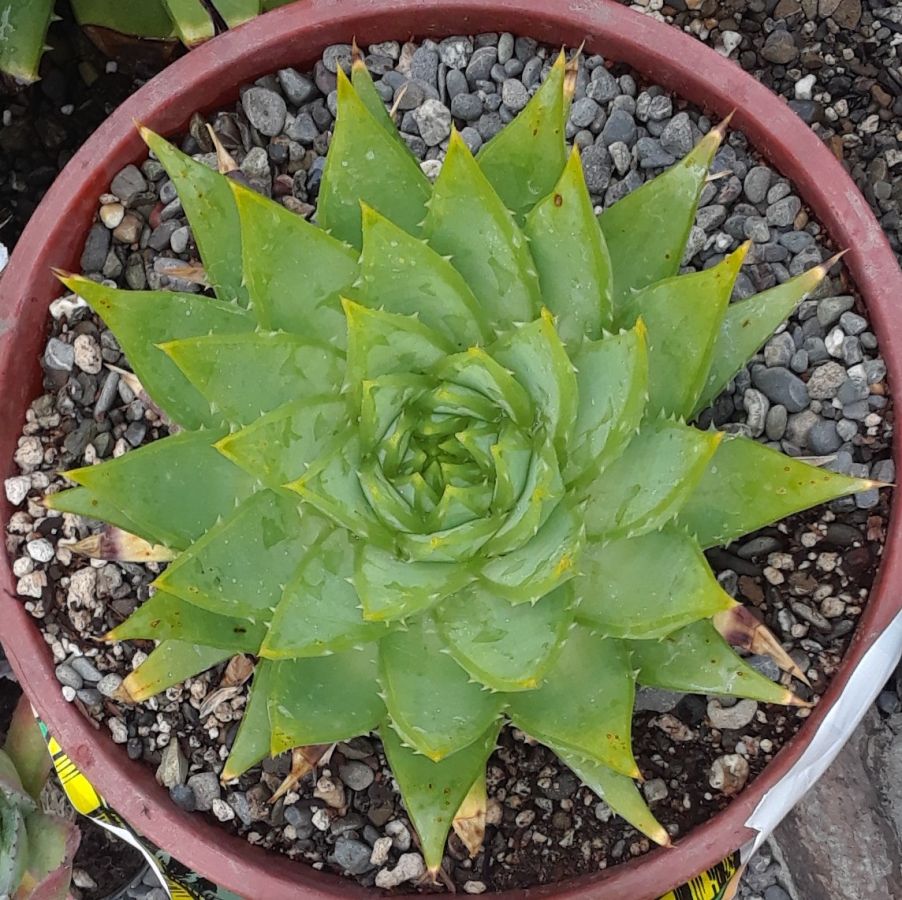
- 2018 05 25 Aloe polyphylla a.jpg (168.19 KiB) Viewed 2771 times
Here's an even smaller one. As I have been becoming more bold with the sun transition process, no longer fearing the demise of the plant, but knowing that it actually only involves a temporary sacrifice of looks, and that it is a necessary step to achieve the desirable compact form plant - I've been moving out my plants even earlier, with the idea of just getting it done with the earlier the better.
This one went out early this year. As you can see, the remnants of all the burned leaves are all down at the bottom of the rosette now, and nice compact leaves in the center, which will soon take over the entire rosette.
By the way, as Alan Beverly warns of in his writings, it is important to allow leaves that are retiring to completely die back on their own before removing them from the plant. Apparently, the "goo" (as he calls it) is reabsorbed by the plant, and you don't want to interfere with this process.
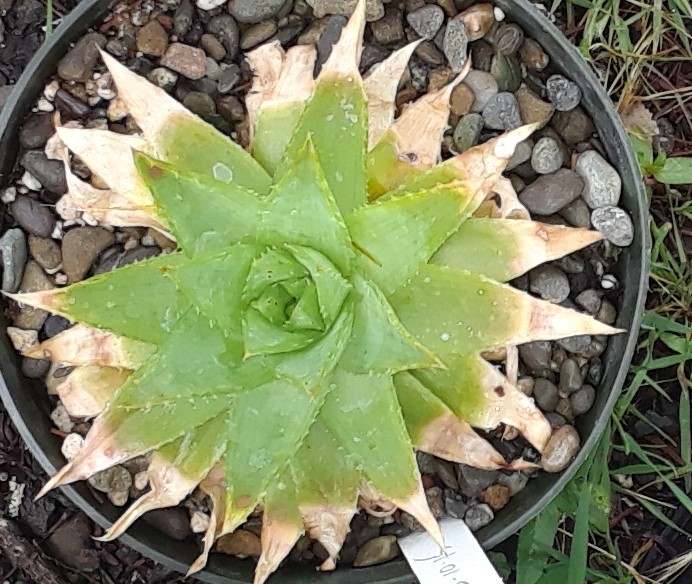
- 2018 05 25 Aloe polyphylla b.jpg (180.66 KiB) Viewed 2771 times
Anyway, I know at some point, especially with some new plants that are greenhouse grown with open rosettes of long leaves, this is something you'll probably start thinking about eventually. I just wanted to give you a head start with some information to save you time and worry. It took me about 2 years to learn how to do this right, so I thought I'd save you some time. Because the timing now is that you're already well on your way to summer, you might want to wait until well after the solstice now, when days are shorter, before starting the process in anticipation for achieving compact rosettes next year. At this point, I think I would just enjoy the plants as they are now, and then work with the seasons naturally in getting the job done later.

 I have remove paper thin and dry leaves and other goo like i leave it because i remeber that i have read on AB site not to remove them. In your experiance what do you think how much full sun is needed to form nice thick and not enlogate leaves? I repoted them and put on 30% shade mesh for a few days, then i will move on morning sun for a few hours. After 1 months they will be on 6h sun but not afternoon because then sun here become really strong and burns everything. Good thing is that nights are nice and fresh. Thank you on provided info, really appreciated