Manfredas

Use this forum to discuss matters relating to Agave, Beschorneria, Furcraea, Hesperaloe, Hesperoyucca, Manfreda, Polianthes, Yucca and related species. This is where one posts unknown plant photos for ID help.

Moderators: Meangreen94z, Gafoto

Luc
Ready to Bolt
Posts: 452
Joined: Mon Jun 09, 2014 1:00 pm
Location: Montpellier - France
Contact:

Re: Manfredas

#51

Post by Luc »

MJP wrote:Agave ovatifolia x Manfreda at Juniper Level Botanic Garden
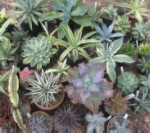
Pictures of the beast ?
MJP
Ready to Bolt
Posts: 943
Joined: Wed May 07, 2014 6:11 am
Contact:

Re: Manfredas

#52

Post by MJP »

Beasts.

And, lamentably, no photos at the moment.
User avatar
Spination
Ready to Bolt
Posts: 5271
Joined: Sun Aug 03, 2014 11:06 am
Location: Sonoma, Ca.
Contact:

Re: Manfredas

#53

Post by Spination »

MJP wrote:What about Nolina and Dasylirion?

I like these woody lilies for their evergreen architecture. Something the Manfredas tend not to have in my North Carolina climate Z7b.
I have Dasylirion wheeleri, but for some reason this one which I've had since 2009 has been a very slow grower. It's larger than when I got it, but not at the impressively full leaved rosette I see so many pictures of. It's thin, and spindly looking.
No Nolina species yet, although I don't know why. Maybe a case of subliminal suggestion - the first 2 letters of the name. No. haha

Reviewing this, I just realized I still had Dasylirion in my Agavaceae folder...just moved it over to Nolinaceae with the Beaucarnea and Calibanus where it belongs. :))

It doesn't look like much, but I like it...
2015 07 03 Dasylirion Wheeleri b X750.jpg
2015 07 03 Dasylirion Wheeleri b X750.jpg (161.56 KiB) Viewed 8436 times
User avatar
Gee.S
Site Admin
Posts: 11020
Joined: Sat Aug 17, 2013 1:42 pm
Location: Fountain Hills, AZ
USDA Zone: 9b
Contact:

Re: Manfredas

#54

Post by Gee.S »

D. wheeleri is the single most ubiquitous succulent found across Arizona, particularly central Arizona. It is also one of the most common landscape plants through the Phoenix area. That suggests to me that it's likely to struggle in coastal CA. Have you ever seen it prosper in any regional botanical garden? Those botanical gardens have their tricks, ya know...
Agave
"American aloe plant," 1797, from Greek Agaue, proper name in mythology (mother of Pentheus), from agauos "noble," perhaps from agasthai "wonder at".

"Some talk the talk, others walk the walk, but I stalk the stalk"
User avatar
agavegreg
Ready to Bolt
Posts: 719
Joined: Wed Dec 11, 2013 12:46 pm
Contact:

Re: Manfredas

#55

Post by agavegreg »

MJP, looks like your xMangave 'Bloodspot' got pollinated by Agave isthmensis. Very cool if that did happen.
Image
MJP
Ready to Bolt
Posts: 943
Joined: Wed May 07, 2014 6:11 am
Contact:

Re: Manfredas

#56

Post by MJP »

All Mangave 'Bloodspot' x o.p. seedlings spoken for.

Thanks for your interest.

I think a variegated A. isthmensis did bloom in the garden (PDN) at the same time as the 'Boodspot', but my memory is far from precise on that account.
User avatar
Spination
Ready to Bolt
Posts: 5271
Joined: Sun Aug 03, 2014 11:06 am
Location: Sonoma, Ca.
Contact:

Re: Manfredas

#57

Post by Spination »

That's interesting you mention the possibility of a variegated A. isthmensis blooming concurrently with Bloodspot, because when I first saw the pic of X#5, it immediately jumped out at me as having a hint of variegation. It could be an optical illusion, and it may be coincidental and/or irrelevant as well. I had done a great deal of reading a while back about variegation, and without checking my notes, my recollection is that variegation was the result of cytoplasmic inheritance. In other words, that trait passed on by the seed parent/mother plant only. But, I'm not sure if that is species dependent, or universal, because almost all of the studies I had read specifically involved Arabidopsis, which is apparently the plant of choice for conducting a smorgasbord of different studies and experiments.
Still, it's a curiosity and very interesting. :))
MJP
Ready to Bolt
Posts: 943
Joined: Wed May 07, 2014 6:11 am
Contact:

Re: Manfredas

#58

Post by MJP »

I was WRONG about Agave isthmensis. I talked to Tony Avent this morning. He said he'd have to check his records, but that he thought that an Agave potatorum was in bloom at the same time as Mangave 'Bloodspot'. Tony said he'd have to check his records to be certain.
User avatar
agavegreg
Ready to Bolt
Posts: 719
Joined: Wed Dec 11, 2013 12:46 pm
Contact:

Re: Manfredas

#59

Post by agavegreg »

Yeah, I could see A. potatorum as the other parent to those seedlings, if not A. isthmensis.
Image
User avatar
Jkwinston
Ready to Bolt
Posts: 1733
Joined: Wed Sep 18, 2013 12:30 pm
Location: London UK
Contact:

Re: Manfredas

#60

Post by Jkwinston »

agavegreg wrote:Yeah, I could see A. potatorum as the other parent to those seedlings, if not A. isthmensis.
Really? I have just received my Bloodspot No 11 this morning in the mail, and there is no doubt in my mind that the parent is Agave scabra. Look at those central spines in the photo; and the rather surprising weight of the plant even at that juvenile size. I am looking forward to watching it grow. Thanks again Mike! Jkw
User avatar
agavegreg
Ready to Bolt
Posts: 719
Joined: Wed Dec 11, 2013 12:46 pm
Contact:

Re: Manfredas

#61

Post by agavegreg »

The plants labeled #4 through #10 definitely have A. isthmensis/potatorum terminal spines and marginal teeth influence. Number 11 has the incurve from A. asperrima, and it is entirely possible that more than one agave crossed with the xMangave, especially in cultivation. Guess only Tony could answer the question about what was in bloom at the same time.
Image
User avatar
Jkwinston
Ready to Bolt
Posts: 1733
Joined: Wed Sep 18, 2013 12:30 pm
Location: London UK
Contact:

Re: Manfredas

#62

Post by Jkwinston »

agavegreg wrote:The plants labeled #4 through #10 definitely have A. isthmensis/potatorum terminal spines and marginal teeth influence. Number 11 has the incurve from A. asperrima, and it is entirely possible that more than one agave crossed with the xMangave, especially in cultivation. Guess only Tony could answer the question about what was in bloom at the same time.
Thanks Greg. That makes sense. As soon as most of the team have received their seedlings, it will be interesting to note their response. For me, I expected a much smaller plant, and what I got was a little giant which will definitely mimic the asperrima character. But, I am truly excited about this seedling. I love the idea of the background of mixed parentage. Jkw
User avatar
Spination
Ready to Bolt
Posts: 5271
Joined: Sun Aug 03, 2014 11:06 am
Location: Sonoma, Ca.
Contact:

Re: Manfredas

#63

Post by Spination »

Winston, I'm very impressed that it apparently takes the same length of time to ship to the UK as to California. Then again, California is like a whole different country from the rest of the U.S...so maybe it makes sense. D))

Also, from info given from others who have had zero luck trying to get plants from the U.S. to Europe, I'm equally impressed that it worked out for you, without any hitch. Nice!

I would be hesitant to offer any opinion of parentage (other than the known Mangave) based on the texture. Among rough surfaced plants I have: asperrima, tecta, mapisaga, isthmensis, pygmae (all even rougher than "Sharkskin" which I have)... I would be hard pressed to say which of those are actually more rough than the other, and even more hard pressed to make any judgement based on that factor alone.

For me, the bottom line is what actual plants were blooming at the time (which is currently up in the air), and also Greg's knowledge and comparisons which he shared regarding leaf characteristics observed.

As is, we know that "Bloodspot" is believed to be a product of A. macroacantha and M. maculosa...and these hybrids the result of being bred back to an undetermined agave...possibly potatorum/isthmensis (but not saying they are the same). So,
{25% Manfreda + 25% A. macroacantha (maybe)} + 50% agave (potatorum?).
For that matter, I think it's tough to guess what characteristics would be attributable to which plants, and then how and what the combinations of genetic factors would be expressed in the phenotype of the progeny = 100% speculation. ::wink::

The only certainty is that the plants are interesting, and very nice, and grown thus far to perfection!

EDIT - It also occurred to me that we don't know if the plant could have self-pollinated. ??? So...
User avatar
Jkwinston
Ready to Bolt
Posts: 1733
Joined: Wed Sep 18, 2013 12:30 pm
Location: London UK
Contact:

Re: Manfredas

#64

Post by Jkwinston »

Thanks! You are right. Too much speculation, without concrete facts, will not confirm the important aspects of the seedlings parentage. I have had only one bloodspot agave, which I have recently beheaded because of rot, and which in many ways is the very opposite of my new plant. It was very light, and followed closely the Manfreda formula, as it grew. The new baby is very different; and on examination, the only Manfreda element is a few spots. I am willing to admit, at this early stage, that these characteristics could pertain only to my seedling, and could certainly be different for others. Still, I look forward to the next stage, not only to the regular growing, but also to the production of suckers. If they do, what will they look like. Jkw
User avatar
Spination
Ready to Bolt
Posts: 5271
Joined: Sun Aug 03, 2014 11:06 am
Location: Sonoma, Ca.
Contact:

Re: Manfredas

#65

Post by Spination »

If you like the spotting characteristic, this trait is affected by the sun in a big way. I had read about this, as far as recommending ample sun to bring out the spots, but I also was able to see this development first hand. Here's an example of Mangave Macho Mocha which I got in Feb. The plant was loaded with pups, which were unequally shaded by the leaves of the mother plant, and as such, mostly green. One pup was growing from near the edge of the pot, received more sun, and thus had more color. Anyway, I separated the pups and potted them separately on day 1, and now they all feature far more spotting/color. Because I wanted to give them ample sun, but not fry them either, they get direct sunshine until early afternoon, after which they receive shade from trees.

Here's the group photo when I got them after removing the pups. The plants of particular interest are the 3 largest pups.
2015 02 07 Mangave Macho Mocha b _Peacock X750.jpg
2015 02 07 Mangave Macho Mocha b _Peacock X750.jpg (141.42 KiB) Viewed 8361 times
Now here are those 3 large pups today. The one in the middle is the large pup in the upper pic which is mostly green.
2015 07 12 Mangave Macho Mocha b X750.jpg
2015 07 12 Mangave Macho Mocha b X750.jpg (99.48 KiB) Viewed 8361 times
So, what they say about the spotting and color becoming more prevalent with more sun is true. My thinking then is that to bring out the maximum potential of what spotting is evident in the new Mangavegave (lol), would be ample sun.
User avatar
Jkwinston
Ready to Bolt
Posts: 1733
Joined: Wed Sep 18, 2013 12:30 pm
Location: London UK
Contact:

Re: Manfredas

#66

Post by Jkwinston »

Thanks! I appreciate your comments about spotting very much, and which first came to my attention with my two M maculosa. Both have now bloomed, and the one in my greenhouse has very few spots, whereas last year's bloomer, which is outdoors and is pushing out new shoots, is rolling in it. It would be very interesting to see what effect the sun will have on the new seedling. Jkw
User avatar
Melt in the Sun
Ready to Bolt
Posts: 2316
Joined: Mon Feb 24, 2014 3:41 pm
Location: Tucson, AZ
USDA Zone: 9b
Contact:

Re: Manfredas

#67

Post by Melt in the Sun »

agavegreg wrote:Number 11 has the incurve from A. asperrima
My 'Bloodspot' does something similar all by itself...photo from a rainy day in March:
Attachments
20150318_175748.jpg
20150318_175748.jpg (115.01 KiB) Viewed 8347 times
User avatar
Spination
Ready to Bolt
Posts: 5271
Joined: Sun Aug 03, 2014 11:06 am
Location: Sonoma, Ca.
Contact:

Re: Manfredas

#68

Post by Spination »

Wow, that's very different and cool looking with the apple green color. From the # of leaves, I'm guessing you've had it a few years? Mine has a more drab olive green color, but I think it's younger than yours. Did your's look different before, or pretty much the same throughout as far as the green color? Previously, I thought they all had about the same look to them, but now I see there's variation out there in those too.
2015 06 30 Mangave Bloodspot X750.jpg
2015 06 30 Mangave Bloodspot X750.jpg (201.84 KiB) Viewed 8346 times
User avatar
Melt in the Sun
Ready to Bolt
Posts: 2316
Joined: Mon Feb 24, 2014 3:41 pm
Location: Tucson, AZ
USDA Zone: 9b
Contact:

Re: Manfredas

#69

Post by Melt in the Sun »

It's a few years old. When it's dry, the color is the same as yours :)
User avatar
Melt in the Sun
Ready to Bolt
Posts: 2316
Joined: Mon Feb 24, 2014 3:41 pm
Location: Tucson, AZ
USDA Zone: 9b
Contact:

Re: Manfredas

#70

Post by Melt in the Sun »

Dry picture from this morning:
Attachments
20150715_082447_resized.jpg
20150715_082447_resized.jpg (113.72 KiB) Viewed 8314 times
User avatar
Melt in the Sun
Ready to Bolt
Posts: 2316
Joined: Mon Feb 24, 2014 3:41 pm
Location: Tucson, AZ
USDA Zone: 9b
Contact:

Re: Manfredas

#71

Post by Melt in the Sun »

Well, my plant from @MJP is starting to flower! I think I got plant #4 from his original offer post here:
viewtopic.php?f=3&t=3898#p12520

It's under my temporary rehab structure so I'll have to poke a little hole in the shadecloth...
Attachments
20220817_082122_resized.jpg
20220817_082122_resized.jpg (504.68 KiB) Viewed 7387 times
User avatar
Gee.S
Site Admin
Posts: 11020
Joined: Sat Aug 17, 2013 1:42 pm
Location: Fountain Hills, AZ
USDA Zone: 9b
Contact:

Re: Manfredas

#72

Post by Gee.S »

I've heard a variety of Bloodspot bloom outcome stories. I had one bloom a few years back -- no bulbils and the plant perished afterward. But I had an isthmensis in bloom at the same time, and attempted a cross. I only wound up with a handful of seed, one of which grew into a really nice plant, and has since generated two offsets.

That's my story, and I'm sticking to it. Good luck with yours.
Agave
"American aloe plant," 1797, from Greek Agaue, proper name in mythology (mother of Pentheus), from agauos "noble," perhaps from agasthai "wonder at".

"Some talk the talk, others walk the walk, but I stalk the stalk"
User avatar
Melt in the Sun
Ready to Bolt
Posts: 2316
Joined: Mon Feb 24, 2014 3:41 pm
Location: Tucson, AZ
USDA Zone: 9b
Contact:

Re: Manfredas

#73

Post by Melt in the Sun »

This isn't 'Bloodspot', it's already a cross. Got nothing else blooming here, but I'll try to self it.
User avatar
Gee.S
Site Admin
Posts: 11020
Joined: Sat Aug 17, 2013 1:42 pm
Location: Fountain Hills, AZ
USDA Zone: 9b
Contact:

Re: Manfredas

#74

Post by Gee.S »

If not Bloodspot, it's something awfully close. No wonder you have nothing else going now, this is a really odd time to start tossing a stalk.
Agave
"American aloe plant," 1797, from Greek Agaue, proper name in mythology (mother of Pentheus), from agauos "noble," perhaps from agasthai "wonder at".

"Some talk the talk, others walk the walk, but I stalk the stalk"
User avatar
Gee.S
Site Admin
Posts: 11020
Joined: Sat Aug 17, 2013 1:42 pm
Location: Fountain Hills, AZ
USDA Zone: 9b
Contact:

Re: Manfredas

#75

Post by Gee.S »

Just for grins, this is my little hybrid. Leans a bit toward isthmensis, but with a coarse leaf texture. Sadly, no spots...

bxi.jpg
bxi.jpg (276.05 KiB) Viewed 7372 times
Agave
"American aloe plant," 1797, from Greek Agaue, proper name in mythology (mother of Pentheus), from agauos "noble," perhaps from agasthai "wonder at".

"Some talk the talk, others walk the walk, but I stalk the stalk"
Post Reply

Who is online

Users browsing this forum: jdjn13 and 26 guests